
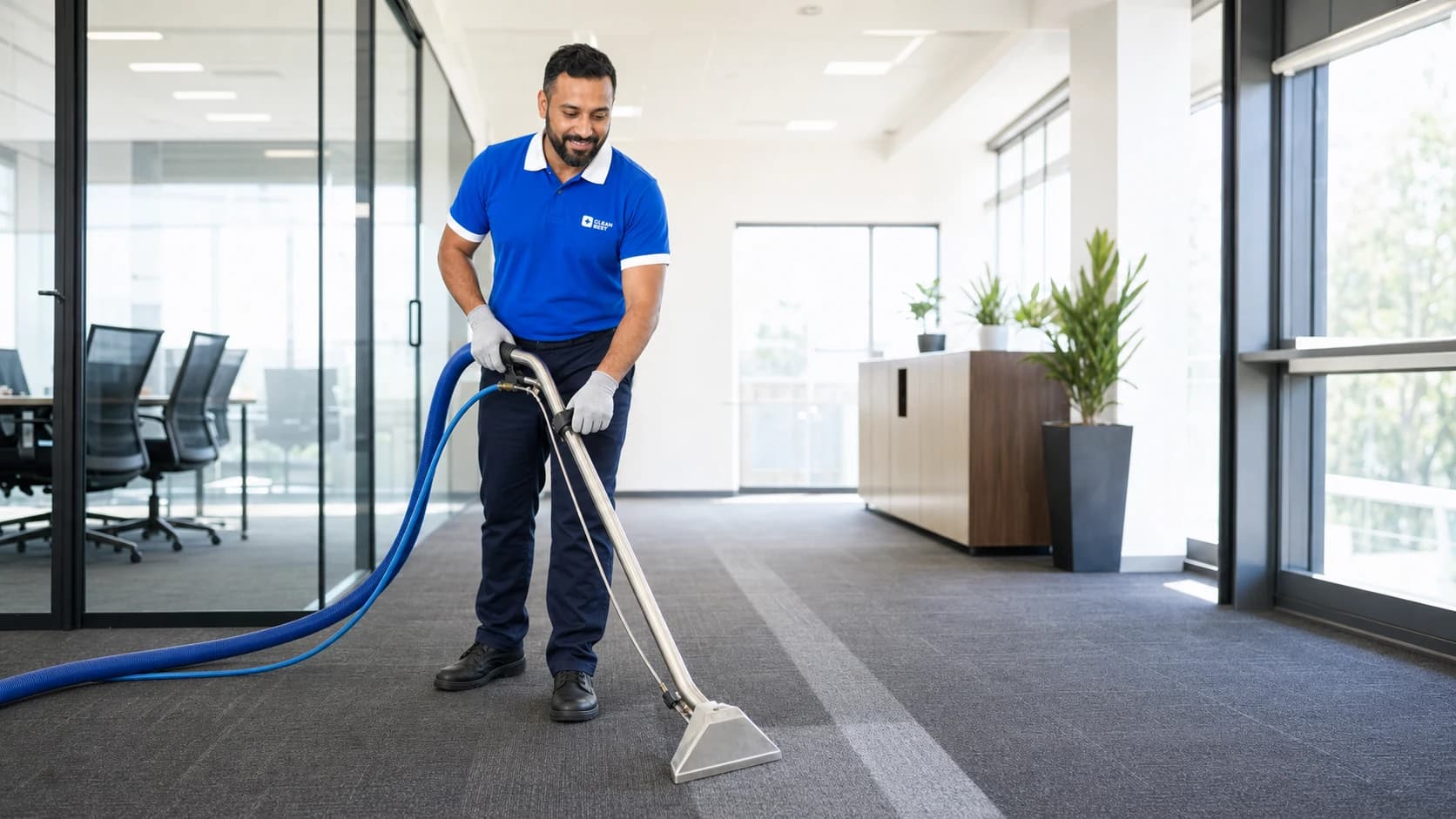
Hot-water extraction
Carpet Cleaning Sydney
Hot-water extraction that lifts traffic lanes, spills and odours out of carpet in Sydney homes and offices. Pre-sprayed, agitated, extracted, rinsed and groomed, with typical drying of four to six hours. Free assessment and a fixed written quote within 24 hours.
- Hot-water extraction, never a wet shampoo
- Typical drying time of four to six hours
- Spot, spill and odour treatment included
- Homes, offices, strata, gyms and schools
What you can hold us to
Every claim below is documented and we will send you the paperwork before the first shift.
- $20m public liability
- Certificate of currency on request
- Police-checked cleaners
- WWCC-cleared for childcare and schools
- No lock-in contracts
- Fixed written quote within 24 hours
What is carpet cleaning in Sydney?
Carpet cleaning is the deep extraction of soil, oils and stains from carpet fibre, most commonly by hot-water extraction. A pre-spray breaks the soil down, agitation works it through the pile, and a machine injects hot water and immediately vacuums it straight back out with the dissolved dirt.
Carpet cleaned this way is left damp rather than wet and typically dries in four to six hours with airflow. Clean Best cleans carpet in Sydney homes, offices, strata common areas, gyms and schools, on a one-off or scheduled basis, with a fixed written quote.
- Trading since 2015Sydney-based, family-operated
- Police-checked cleanersWWCC-cleared for childcare and schools
- $20m public liabilityCertificate of currency on request
- Written quote in 24 hoursFixed price, no lock-in contract
How we clean carpet
Carpet cleaning Sydney relies on hot-water extraction
Almost everyone books carpet cleaning Sydney wide for the same three reasons: a traffic lane that has gone grey, a stain that will not come out, or a smell nobody can find. All three come back to the same thing. Soil is not sitting on top of the carpet — it is bound into the fibre by an oily film that vacuuming cannot touch. Once that film is there, every footstep grinds fresh grit into it, the pile abrades, and the lane darkens permanently. The job of a real carpet clean is to dissolve that film and physically remove it from the building, not to redistribute it.
That is what hot-water extraction does. We vacuum the dry soil out first, because putting water on loose grit turns it into mud. A pre-spray goes down and is left to dwell so it has time to break the soil and body oils away from the fibre. Traffic lanes and entries get agitated with a counter-rotating brush, which is the step most people skip and the step that does most of the work. Then the extractor injects hot water under pressure and vacuums it back in the same pass, taking the suspended soil with it. Finally we rinse, so no detergent is left behind in the pile to attract new dirt the moment the room is back in use.
What actually comes out, and what does not
We would rather tell you the truth at the quote than at the end of the job. Coffee, tea, wine, food, grease, mud, ink, blood and pet accidents are soil, and soil comes out — sometimes fully, sometimes to the point where you have to know where to look. Bleach, dye transfer from a rug or a rubber mat, sun fade along a window line, and burns are not soil. They are damage to the fibre itself, and no amount of extraction brings the colour back. When we see those, we say so, because promising a miracle and delivering a shrug is how carpet cleaners get a bad name.
Odour is its own problem. A deodoriser sprayed over a urine patch works for about a week. Urine passes through the carpet into the underlay and often into the subfloor, and it is the crystallised salts sitting down there that keep releasing the smell every humid day. We treat those with an enzyme product that breaks them down, and where it has been going on for years we will tell you plainly that the underlay needs to come out. It is a cheaper conversation to have before we start.
Offices, strata and the buildings that never stop
Commercial carpet is a maintenance problem, not a cleaning problem. An office lobby, a lift landing, a gym corridor or a school hallway takes the same soil load in three months that a lounge room takes in three years, and it is concentrated into a strip a metre and a half wide. Left alone, that strip greys, the pile lays over, and it never fully recovers no matter what you spend later.
The fix is unglamorous: extract on a cycle before the film builds, maintain the traffic lanes between cleans, and put a protector on the entries and lift lobbies where the damage concentrates. We run those programs quarterly, half-yearly or annually depending on the traffic, work after hours or on weekends so the floor is dry before anyone arrives, and give you a written record of what was cleaned and when for your building file. Strata committees and facilities managers tend to need that record more than they need the clean itself.
Homes, and the honest version of what to expect
In a house, the carpet that needs the most work is almost never the bedroom. It is the hallway, the top three stairs, the strip in front of the lounge, and whatever the dog has decided is its spot. We concentrate the passes there rather than treating every square metre identically. Furniture on castors gets moved and blocked so it does not stain or rust on the damp pile. Anything that would be risky to shift — a piano, a full bookcase, a fish tank — stays where it is and we clean around the footprint, which we will tell you before we start rather than after.
Drying is the question everyone asks. Four to six hours is normal with reasonable airflow, and the carpet is walkable in socks well before that. A closed, humid room takes longer, so we open what we can and set air movers where speed matters. If a room absolutely has to be back in service within the hour, we will recommend low-moisture encapsulation instead — it removes less soil, but it is the right tool in that situation, and pretending otherwise helps nobody.
Quoting, and what it includes
We quote on the carpeted area, the soil level, the fibre and whether furniture needs moving. For smaller residential jobs, clear photos of the rooms and the worst marks are usually enough to price it without a site visit. For offices, strata and schools we walk the floor. Either way the price is fixed in writing within 24 hours, with odour treatment, protector and stair detailing shown as separate line items so you can decide what you actually want rather than being bundled into extras you never asked for.
Clean Best has been cleaning across Sydney since 2015, carries $20m public liability, and our technicians are police-checked employees. Call 1300 494 983, or send the form with a few photos, and we will tell you what your carpet is likely to do.
Offices, strata and schools
Commercial carpet is a maintenance job, not a rescue job
A lift lobby, an office walkway or a school corridor takes on more soil in one season than a lounge room sees in years, and all of it lands in a strip barely a metre and a half wide. Left to build, the pile lays over and the lane goes grey for good, and by that point no amount of spending brings the colour back.
So we work commercial floors on a cycle instead. Extraction quarterly, half-yearly or annually depending on the traffic, traffic-lane maintenance in between, and protector on the entries and lift lobbies where the wear concentrates. Cleans are scheduled after hours or on a weekend so the floor is dry before anyone arrives, and you get a written record of what was cleaned and when for the building file.
- Quarterly, half-yearly or annual extraction cycles
- After-hours and weekend work so floors are dry by morning
- Carpet protector on entries and lift lobbies
- A written record of every clean for your building file
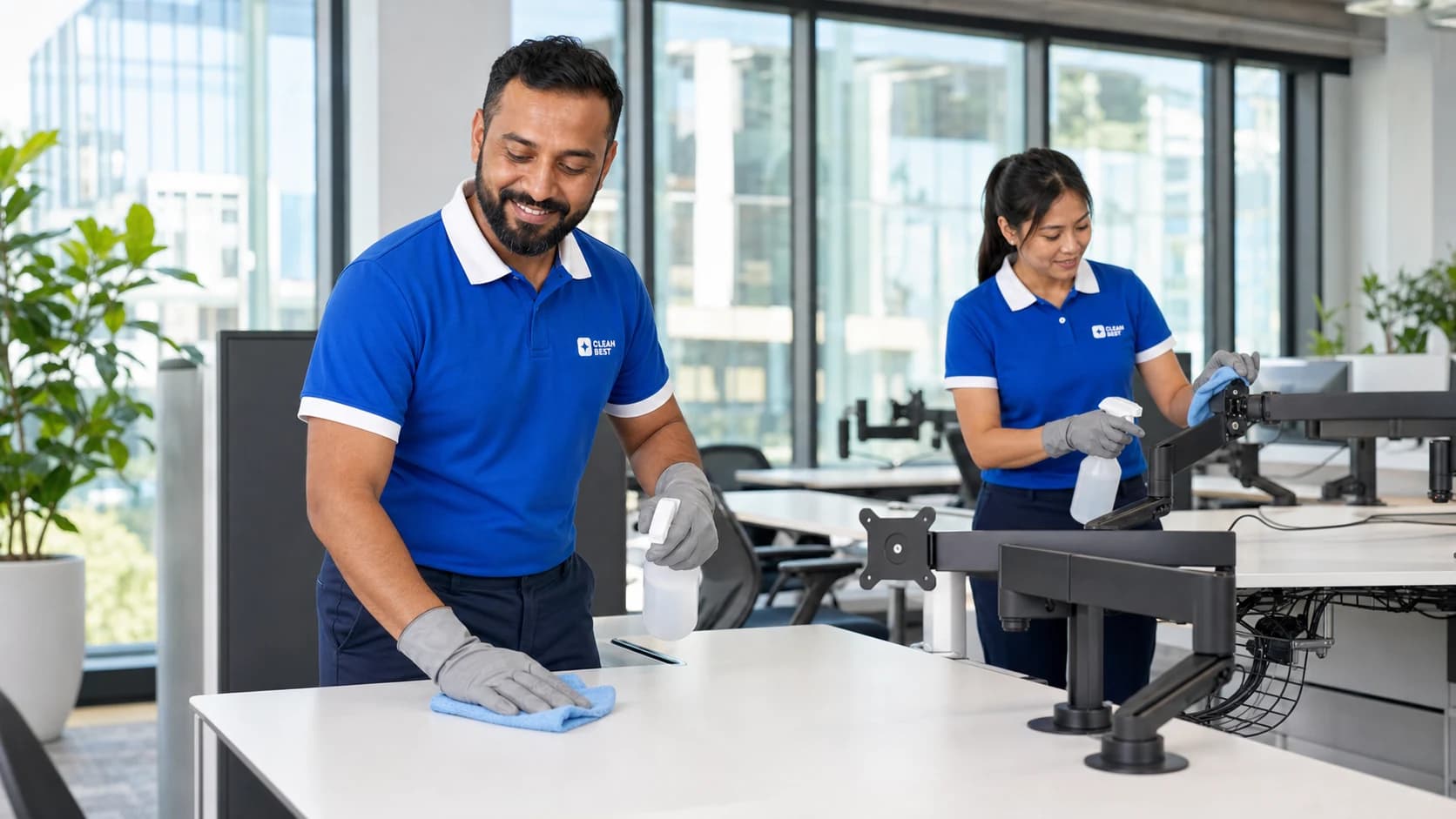
What's included
What a carpet clean includes, start to finish
The sequence matters more than the machine. Skip the pre-vacuum or the rinse pass and the carpet greys again within weeks.
- Walk-through with you to mark traffic lanes, spots and any fibre we need to test first
- Dry soil vacuumed out with a commercial machine before any moisture goes down
- Furniture on castors moved and blocked; heavy and fragile pieces worked around
- Pre-spray applied and left to dwell so soil and body oils release from the fibre
- Traffic lanes, entries and lift lobbies agitated with a counter-rotating brush
- Spots pre-treated by type: coffee, red wine, ink, grease, blood and pet accidents
- Hot-water extraction across the full area, with overlapping passes on heavy soil
- Rinse pass so no detergent residue is left in the pile to attract new soil
- Enzyme odour treatment where urine or damp has soaked into the backing
- Deodoriser and carpet protector applied where you have asked for them
- Pile groomed in one direction so the carpet dries evenly and looks uniform
- Air movers set up in rooms that need to be back in use quickly
- Edges, corners, stair nosings and skirting lines hand-detailed with a crevice tool
- Final inspection with you, and a return visit if a stain wicks back as it dries
Bleach marks, dye transfer, sun fade and burns are damage to the fibre rather than soil, and cannot be extracted. We will tell you which is which at the assessment, not after the job.
At a glance
Method and drying time by soil level
What Clean Best does to a carpet depends on how much soil is in it and where. This is the method each level of soiling gets, and how long it takes to dry.
| Soil level | Typical method | Typical drying time |
|---|---|---|
| Light — bedrooms, offices, low-traffic rooms | Pre-vacuum, pre-spray with dwell time, hot-water extraction, rinse pass | Four to six hours |
| Moderate — living areas, hallways, meeting rooms | As above, plus counter-rotating brush agitation through the walkways | Four to six hours |
| Heavy — entries, lift lobbies, corridor traffic lanes | Longer pre-spray dwell, agitation, overlapping extraction passes, protector on entries | Four to six hours with air movers running |
| Spots and spills — coffee, wine, ink, grease, blood | Pre-treated by stain type before the extraction pass | As for the surrounding carpet |
| Pet urine soaked into the backing or underlay | Enzyme treatment of the affected area; underlay replacement where it has soaked through | Longer than four to six hours where the backing is saturated |
| Room that must be back in use immediately | Low-moisture encapsulation instead of extraction | Usually back in use within the hour |
Pricing
Carpet cleaning quoted on area, soil level and fibre
We price on the carpeted area, how heavily soiled the traffic lanes are, the fibre type, and whether furniture needs moving. The price is fixed in writing before we unroll a hose.
A few rooms
Apartments, smaller houses and single offices: a lounge, a hallway and one or two rooms.
- Pre-vacuum, pre-spray, agitation and hot-water extraction
- Spot treatment on every mark you point out
- Grooming and air movers to bring drying time down
- Booked into a single morning or afternoon
Fixed price, confirmed in writing before we start.
Whole home or full floor
An entire house, a set of strata corridors, or one office floor cleaned in a single visit.
- Every carpeted room, hallway, stair and landing covered
- Heavier extraction passes through entries and corridor traffic lanes
- Furniture moved and blocked wherever it is safe to do so
- Scheduled after hours or on a weekend so the space is usable next morning
Fixed price, confirmed in writing before we start.
Scheduled maintenance program
Offices, gyms, schools, clubs and strata buildings that want carpet maintained rather than rescued.
- Quarterly, half-yearly or annual extraction cycles
- Interim spot and traffic-lane maintenance between full cleans
- Carpet protector applied to entries and lift lobbies
- One written record of what was cleaned and when, for your building file
Fixed price, confirmed in writing before we start.
Free on-site assessment, then a written quote within 24 hours.
How it works
From first call to dry carpet
Most residential jobs are quoted from photos. Commercial floors get a walk-through so the scope and the access window are right.
- 1
Call or send photos
Call 1300 494 983 with the rooms, the fibre if you know it, and photos of the worst marks. Photos save a site visit on smaller jobs.
- 2
Assessment and fibre test
We check the fibre, the backing and the soil level, and test anything that could react. You are told what will lift and what will not.
- 3
Fixed written quote
Scope and price within 24 hours, including furniture moving, odour treatment or protector if you want them.
- 4
Extract, groom and dry
We extract, groom the pile and set air movers. Carpet is usually walkable within a couple of hours and dry in four to six.
FAQ
Carpet cleaning questions we get asked most
How long does carpet take to dry after hot-water extraction?
Carpet cleaned by Clean Best typically dries in four to six hours. A properly set up extractor recovers most of the moisture it injects, so the carpet is left damp rather than soaked. Drying is faster in dry, moving air and slower in a closed, humid room, which is why we groom the pile and set air movers where they are needed. Carpet is usually walkable in socks within a couple of hours. We schedule offices after hours so the floor is dry before staff arrive.
What does carpet cleaning Sydney wide cost with Clean Best?
Clean Best prices carpet cleaning on the carpeted area, how heavily soiled the traffic lanes are, the fibre, and whether furniture needs to be moved and blocked. We look at the job, or at good photos for smaller ones, and send a fixed price in writing within 24 hours. Odour treatment, carpet protector and stair detailing are quoted as separate line items, so you can see exactly what you are paying for and decide what you actually want.
Will the stains come back a few days later?
Clean Best returns to re-treat any stain that wicks back after a clean. Wicking happens because the contaminant has soaked into the backing and travels up the fibre with the last of the moisture as the carpet dries. It is normal and it is fixable. What causes carpet to grey again quickly is detergent residue left in the pile attracting fresh soil, which is exactly why we finish with a rinse pass. If a mark reappears, call us and we come back.
Do you use steam cleaning or dry cleaning?
Clean Best uses hot-water extraction — what most people call steam cleaning — as its default method, because it removes the most soil and rinses the fibre rather than coating it. Low-moisture encapsulation has its place, such as an office that must be back in use within the hour, and we will recommend it where it genuinely fits. Wet shampooing is what we do not do: it leaves residue behind, re-soils quickly and takes far too long to dry.
Can you treat pet urine odour in carpet?
Clean Best treats pet urine odour with an enzyme product rather than a surface deodoriser, because a deodoriser only masks the smell for a week. Urine soaks through the carpet into the underlay and often the subfloor, so the enzyme has to break down the salts that keep releasing the odour. In bad cases the underlay has to come out. We tell you at the assessment which of the two you are looking at rather than promising that a spray will fix a floor-level problem.
Do I need to move the furniture before you arrive?
Clean Best moves lounges, chairs and lighter pieces on castors, and blocks them clear of the damp pile so nothing stains or rusts. You move small items, breakables, cords and anything on the floor you would rather we did not handle. We do not move pianos, full bookcases, fish tanks or anything that would risk damage. If a room cannot be cleared, we clean around the footprint and tell you upfront which sections we could not reach.
How often should carpet be professionally extracted?
Clean Best recommends extraction roughly every twelve months in a typical home, and every three to six months in an office lobby, gym floor, school corridor or anywhere shoes track soil in all day. Vacuuming removes dry soil but not the oily film that binds it to the fibre, and once that film builds, traffic lanes go grey and stay grey. Scheduled extraction before that point is far cheaper and far more effective than trying to rescue carpet left for five years.
Keep exploring
Related Clean Best services
Carpet extraction usually gets booked alongside something else. Here is where clients go next.
Book carpet cleaning Sydney offices and homes rely on
A free assessment, straight advice on what will lift and what will not, and a fixed written quote within 24 hours.